
Stiff Handles & Low Pressure: How Hard Water Faucet Buildup Locks Up Aerators and Valves (North Metro MN)
In the North Metro, we see the same service call on repeat: “The kitchen faucet pressure dropped,” or “The bathroom handle is getting stiff.” Nine times out of ten, it’s not a mysterious pipe issue. It’s hard water faucet buildup locking up the small parts that do the actual work inside the faucet.
If you’re a GC or remodeler, this stuff shows up at the worst time: punch list week, final clean, homeowner walkthrough. The fix is usually straightforward, but only if you diagnose the right choke point first.
What hard water is doing inside your faucet (and why it shows up as low pressure)
Hard water carries dissolved minerals, mainly calcium and magnesium. When water sits, heats, or changes pressure inside a fixture, those minerals drop out and harden into scale. Think of it like “stone dust” that slowly turns into a crust.
The two choke points: aerators and cartridges
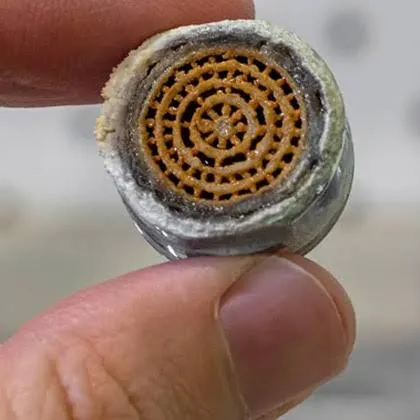
The aerator is the screen at the faucet tip. It’s designed to catch debris and shape the stream. It’s also the #1 place minerals and grit collect.The cartridge/valve is what your handle turns. Scale here makes handles stiff, causes poor mixing, and can reduce flow even if the aerator is clean.
Why scale acts like a one-way restriction
Scale doesn’t build evenly. It piles up around small openings, check valves, and rubber seals. That means flow can look “fine-ish” for a while, then drop suddenly when a chunk breaks loose and wedges into a screen or port.
Quick signs you’re dealing with hard water faucet buildup (not a bigger plumbing issue)
Before you pull apart a faucet, you want to know if you’re chasing a fixture problem or a whole-house supply problem.
Pressure is bad at one faucet only
If every other faucet in the home is fine, odds are high it’s a localized clog: aerator, spray head, cartridge, or a partially blocked angle stop.
The handle feels gritty or stiff
A smooth handle turning into a stiff one is classic mineral scale on cartridge seals or debris caught in the valve body.
Spray pattern is crooked or sputtering
A clogged aerator often looks like:
Stream shooting sideways or in multiple thin jetsPulsing flow that “spits” airWater that sprays the backsplash at random angles
Hot side is weaker than cold (or vice versa)
If only one side is weak, the blockage can be upstream of the spout: angle stop, supply line, cartridge ports, or a balancing spool in certain faucets.
Where the buildup hides: aerators, check stops, cartridges, and supply lines
Hard water doesn’t just crust up the visible screen. It sneaks into the “small diameter” parts you don’t think about until a callback hits.
Sink aerator screens and flow restrictors
Many aerators have multiple layers: a screen, a plastic insert, and a flow restrictor. Scale can pack into any of those layers and cut flow hard.
Angle stops and clogged stop washers
Under-sink shutoff valves (angle stops) can accumulate minerals and sediment. Two common issues:
Stop not fully open because it’s stiff or partially failedDebris breaking loose and lodging downstream at the faucet
Cartridges and balancing spools in modern faucets
Single-handle faucets rely on tight tolerances. Mineral scale can bind the cartridge, wear seals, and restrict flow through internal ports. Some pressure-balance designs add extra components that also clog.
Pull-down hoses, spray heads, and diverters
Kitchen pull-downs have more places to clog: the spray head screen, internal diverter passages, and sometimes a check valve. If the stream mode is weak but spray mode is “okay,” that’s a clue the restriction is in the head assembly.
How to clean a clogged faucet aerator (the safe, no-scratch method)
If your main goal is to clean a clogged faucet aerator without damaging a new finish or creating a leak, keep it simple and controlled.
Tools you’ll want on hand
Soft-jaw pliers or a small adjustable wrench with a thick ragOld toothbrush or nylon detail brushWhite vinegar in a cup or small bowlPaperclip or wooden toothpick (for tiny ports)
Step-by-step aerator cleaning
Protect the finish. Wrap the aerator with a rag before using pliers. Don’t use bare jaws on brushed nickel or matte black.Remove the aerator. Most unthread counterclockwise. If it’s a recessed “cache” aerator, you’ll need the little key that came with the faucet.Rinse and inspect. Knock loose grit into the sink and check for broken screens or cracked plastic inserts.Soak in vinegar. 20 to 60 minutes is usually enough to soften scale. If it’s heavily crusted, you can go longer, but don’t forget it overnight if there are delicate coatings.Brush and pick gently. Use a toothbrush for screens and a toothpick for stubborn holes. Avoid metal tools that can deform the mesh.Flush the faucet. Before reinstalling, run the faucet briefly with the aerator off to push out any debris sitting in the spout.Reinstall and test. Hand-tight is usually enough. If you use a wrench, go light to avoid cracking plastic threads.
If it still won’t come clean: replace instead of fighting it
Aerators are inexpensive, and a damaged insert can create turbulence, noise, or a weak stream even after cleaning. If you’re on a remodel schedule, replacing the aerator is often the fastest “no callback” move.
Stiff faucet handle? Here’s what’s usually happening in the valve
A stiff handle is usually a cartridge problem, not an aerator problem. You can have full flow and still have a handle that feels like it’s dragging through sand.
Mineral scale on cartridge seals
Scale builds on rubber seals and sliding surfaces. Over time it creates friction, which leads to:
Hard-to-turn handles during temperature changesJerky movement when adjusting flowDifficulty balancing hot and cold
Debris from the stop or main
If the home had recent work, a city shutoff, or a water heater change, debris can get stirred up and lodge in the cartridge. That can make the handle stiff and also reduce pressure.
When lubrication helps and when it doesn’t
Some cartridges can be cleaned and re-greased with plumber’s silicone grease. Others are sealed or are so scaled that replacement is the only smart option. If you’re seeing leaks at the handle, skip the “maybe fix” and go straight to a proper cartridge replacement.
DIY checks that protect your schedule (especially on remodel punch lists)
These quick checks help you isolate the issue without turning a simple fix into a half-day detour.
Is it the aerator or the supply? A 60-second test
Remove the aerator and run the faucet into a bucket.If flow returns strong, you’ve found your restriction.If flow is still weak, the restriction is upstream: spray head, cartridge, stops, or supply lines.
Confirm both angle stops are fully open
It sounds obvious, but on punch lists we regularly find stops that were turned down for another trade and never reopened. Open the stops fully, then test again.
Rule out a clogged pull-down spray head
If you have a pull-down, unscrew the spray head (if design allows) and test flow through the hose into a bucket. Strong flow there usually means the head is clogged, not the valve.
When to stop DIY and bring in a pro
Hard water issues can be simple, but they can also be a symptom of a bigger system problem. Calling early can save you repeat trips and awkward homeowner conversations.
Repeated clogs across multiple fixtures
If you’re cleaning aerators every few weeks, you may have broader scaling, sediment issues, or a water treatment gap that needs a real plan.
Brand-new faucet with low pressure
New install + low pressure can mean debris in the cartridge, a kinked pull-down hose, an incorrectly installed supply line, or a stop that’s failing internally. It’s fixable, but you don’t want to guess on a warranty fixture.
Leaks at the handle or under the sink
Once you have leaks, you’re past “quick clean” territory. Leaks risk cabinet damage, flooring issues, and client trust. That’s where a clean, documented repair matters.
Commercial or multi-unit buildings with PRVs and recirculation
In B2B settings, low pressure and scaling can involve pressure reducing valves, recirculation loops, mixing valves, and filter systems. Those need systematic troubleshooting, not part swapping.
How MH Plumbing handles hard water problems with a ‘No Chaos’ approach
When a GC calls us for a “stiff handle and low pressure” situation, the goal is simple: fix it cleanly, document it, and keep the project moving.
Transparent options: clean, rebuild, or replace
Clean when it’s a straightforward aerator or head restriction.Rebuild when the faucet is quality and parts are available (cartridge, seals, stops).Replace when the internal wear is done or the time cost exceeds the value.
We’ll tell you what we’re doing and why before we do it. No surprise change orders, no mystery “extra parts” bills.
Clean job site standards for occupied homes
Mineral scale work is small, but it can still get messy if someone drags tools across a new vanity or leaves vinegar cups around. Our SOP is built around respect for the home:
Work area protected with proper coveringsFixtures and finishes treated carefullySite cleaned up like we were never there
B2B-friendly communication for GCs and builders
If you’re running multiple jobs, you don’t have time to chase updates. We keep it simple: what we found, what we fixed, what to watch for next. If the fix needs parts, we coordinate without blowing up your schedule.
Preventing hard water faucet buildup long-term
You can’t “wish away” hard water in Minnesota, but you can design and maintain around it.
Fixture choices that resist scale
Aerators with easy-to-replace inserts and available keysQuality cartridges with reliable parts supportFixtures that allow spray head servicing without special tools
Water softening and filtration basics (Minnesota realities)
A properly sized water softener reduces scale formation across fixtures and valves. For some properties, a sediment prefilter also helps, especially if you’re seeing grit that plugs screens even faster than mineral crust.
Simple maintenance cadence for property managers and builders
Quarterly aerator checks on high-use sinksAnnual review of angle stops for smooth operationDocumented fixture part numbers for quick cartridge ordering
If you’re building or remodeling in Blaine, Coon Rapids, Andover, Ham Lake, or anywhere around the North Metro, and you want these issues handled without drama, MH Plumbing is built for that. We show up when we say we will, we communicate clearly, and we leave the space clean enough for the homeowner walkthrough.
