5 Hidden Signs Your Water Heater Tank Is About to Fail (And Flood Your Basement)
What “tank failure” actually means (and why basements take the hit)
A lot of people picture a water heater “failing” as a slow drip you can keep a bucket under. Tank failures don’t always show up that politely. When the steel tank finally gives up, you can get a steady leak that soaks a finished basement over hours, or a sudden split that dumps a lot of water fast.
If you’re a remodeler or custom builder, this is reputation stuff. If you’re a homeowner, it’s the kind of surprise nobody wants at 10 p.m. Either way, there’s no money in the water. Catching the early signs is the difference between a scheduled replacement and an emergency cleanup.
Slow weep vs. sudden rupture
Slow weep: Moisture shows up at the base, rust builds, flooring starts to cup, then it becomes “suddenly obvious.”
Sudden rupture: Corrosion reaches a weak spot and the tank opens up fast, especially when heating cycles spike pressure and temperature.
Either way: Once the tank itself is compromised, repairs don’t hold. That’s a water heater tank replacement conversation.
Why finished basements raise the stakes for remodelers and homeowners
Basements are where we put mechanicals in North Metro Minnesota, and they’re also where people invest in offices, bars, gyms, and guest rooms. A few gallons in the wrong direction can mean wet drywall, damaged trim, and flooring replacement. On a job site, it can also mean schedule chaos when other trades get pushed back.
Sign #1: Rusty water or orange staining at fixtures
If you’re seeing rusty water in a tub, or orange staining at a sink aerator, your first thought might be “bad pipes.” Sometimes it is. But it can also be one of the early signs water heater is failing, especially if it’s more noticeable on the hot side.
What it usually points to inside the tank
Internal corrosion: The glass lining inside the tank can’t protect every square inch forever.
Anode rod depletion: The anode rod is supposed to sacrifice itself to protect the tank. When it’s spent, the tank becomes the sacrificial part.
Rust settling: Corrosion byproducts can settle and get stirred up during high demand.
Quick checks you can do without tearing anything apart
Run hot water only at a faucet for a minute and check if discoloration increases.
Pull and rinse the aerator screen and look for rust-colored grit.
Look at the tank’s cold inlet and hot outlet fittings for corrosion or staining.
When it’s time to plan a water heater tank replacement
If the unit is older, you’re seeing hot-side rust symptoms, and other signs below are stacking up, don’t wait for a leak to validate it. Scheduling a replacement is cheaper than a flooded basement and a reputation hit.
Sign #2: A “leaking” water heater that isn’t obvious until you touch the floor
One of the sneakiest warning signs is moisture that doesn’t look like a leak yet. You don’t see a drip line. You just notice the concrete is darker, a piece of cardboard got soggy, or the edge of LVP feels soft.
Moisture at the base, damp concrete, or soft LVP edges
Damp ring at the tank: A thin wet outline around the base is often the first clue.
Cold, wet floor: Especially near the front of the unit where you rarely look.
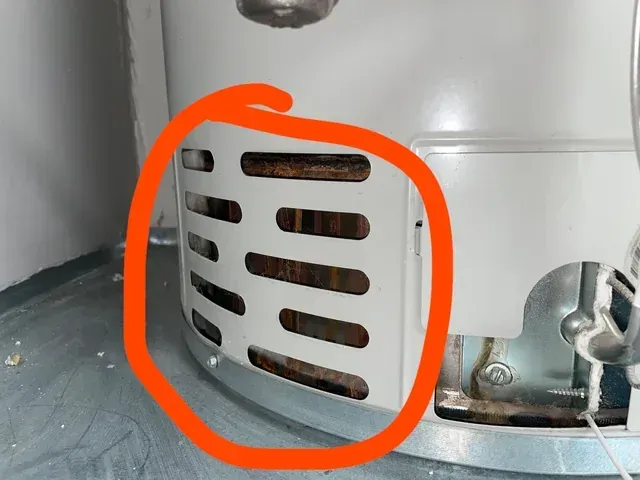
Rust at the seam: Rust streaks near the bottom can mean the tank is weeping.
Common lookalikes: condensate, T&P discharge, fittings
Not every wet spot means the tank is shot. A clean diagnosis matters.
Condensation: Cool basement air + cold tank surface can create sweating, especially in humid months.
T&P valve discharge: The temperature and pressure relief valve might drip if pressure is high or the valve is failing.
Connection leaks: Dielectric unions, nipples, or a failing shutoff can drip and track down the jacket.
Why water heater leaking from bottom is a big red flag
If the moisture is truly coming from the bottom seam or the tank itself, that’s typically end-of-life. At that point, “patching it” isn’t a real plan. That’s when leaking water heater tank replacement becomes the responsible move.
Sign #3: Popping, rumbling, or banging sounds you didn’t hear last year
A water heater isn’t silent, but it also shouldn’t sound like a popcorn machine. When you hear new popping or rumbling, pay attention.
Sediment and scale in Minnesota water conditions
Mineral buildup and sediment can collect at the bottom of the tank. When the burner or elements heat through that layer, water gets trapped and flashes to steam, which creates popping and rumbling.
How noise ties to overheating and tank stress
Hot spots form: Scale creates uneven heating, stressing the steel.
Efficiency drops: The unit works harder for the same hot water output.
Failure risk rises: More stress, more corrosion, and more chance the tank gives way.
When flushing helps vs. when it’s too late
Helps: Light sediment, newer equipment, and consistent maintenance history.
Too late: Heavy noise plus rust symptoms, base moisture, or age-related decline.
Smart move: Have a pro evaluate before you stir up a tank that’s already weak.
Sign #4: The closet or utility room smells metallic, musty, or “off”
Odors are easy to ignore because they don’t look like a mechanical problem. But a musty or metallic smell near the water heater can be one of those hidden signs water heater is failing.
Micro-leaks, rust, and hidden evaporation
Micro-leaks: Tiny leaks can evaporate on warm surfaces and never leave a puddle.
Rust and wet insulation: Once insulation inside the jacket gets wet, it can smell musty.
Ongoing humidity: A chronic damp zone invites mold in finished basement builds.
What to look for around the draft hood, venting, and drain pan
Rust streaking: On the jacket, at fasteners, and around the burner compartment door.
Drain pan condition: Pan full of water, cracked pan, or pan with rust buildup.
Venting concerns: Any backdrafting signs should be addressed immediately for safety.
Why ignoring odor turns into mold calls and schedule delays
For GCs, the job isn’t just “replace a water heater.” The job is delivering a clean, predictable project. A musty mechanical room that turns into a mold issue can stall trim, paint, flooring, and final walkthroughs.
Sign #5: Temperature swings or short hot-water runs (especially under normal load)
If the shower goes cold faster than it used to, or the temperature swings under the same household load, your water heater is telling you something. Performance problems can show up before visible leaks.
Dip tube and stratification issues
Dip tube wear: If cold water isn’t delivered to the bottom correctly, you get lukewarm water fast.
Stratification: Sediment and internal wear can create weird hot and cold layers in the tank.
Reduced usable capacity: The tank may still “heat,” but you get fewer good minutes.
Thermostat and element warning signs
Electric units: A failing element can cause slow recovery and uneven temperatures.
Gas units: Burner and gas valve issues can reduce output and create inconsistent heat.
Safety note: If you smell gas or suspect venting problems, stop and call a pro.
Why performance issues can precede a leak
When a tank is loaded with sediment, corroding internally, or overheating in spots, it’s under more stress. That stress often shows up first as complaints about hot water, then later as a leaking water heater situation.
If you spot these signs: a no-chaos action plan (homeowners + GCs)
When we get a call in the North Metro, the goal is simple: protect the home, protect the schedule, and keep the site clean. Here’s a practical checklist you can use before the water spreads.
Shutoff steps that prevent a basement flood
Shut off cold supply: Use the valve on the cold line feeding the water heater.
Kill power or gas: Turn off the breaker for electric, or set gas control to off.
Stop active spread: Use towels, a wet vac, and keep water away from finished materials.
Don’t ignore pressure: If you’re unsure, pause and call. A wrong move can worsen it.
Documenting and communicating on a job site
Take clear photos: Base of tank, valves, pan, and any visible staining.
Text the GC and homeowner: Quick status, quick plan, no surprises.
Protect adjacent work: Cover finished floors and stage removal paths to avoid scuffs.
How we handle a clean, transparent water heater tank replacement
MH Plumbing runs a “No Chaos” SOP. That means you’ll know when we’re arriving, what we’re doing, and what it costs before we start. We respect the home and the schedule, and we leave the mechanical area cleaner than we found it.
Straight diagnosis: We confirm whether it’s tank failure or a fitting/valve issue.
Clean changeout: Floor protection, tight work area, and responsible disposal.
Clear options: Capacity, venting, code items, and add-ons like pans or alarms.
Proof and transparency: Before-and-after visuals when helpful, plus clean billing.
If you’re a GC, the goal is a seamless handoff so you don’t have to babysit the trade. If you’re a homeowner, the goal is peace of mind with a team you can trust in your basement.
FAQ: leaking water heater tank replacement timing, permits, and costs (high level)
Can I wait if it’s a small leak?
If the tank is leaking from the bottom seam, waiting is a gamble. Small leaks have a habit of turning into big ones at the worst time. If it’s a fitting, valve, or T&P discharge, you may have a repair path, but you still want it looked at quickly.
Do I need a permit in the North Metro?
Permitting requirements can vary by city (Blaine, Coon Rapids, Andover, Ham Lake, and surrounding areas). A professional contractor will confirm what applies and handle the proper process so you’re covered.
How long does replacement take?
Most standard replacements can be completed in a single visit, assuming access is reasonable and no venting or code upgrades are required. If we’re coordinating around other trades on a remodel, we’ll schedule it to protect your timeline.
Should I consider a drain pan, leak alarm, or auto shutoff?
Drain pan: Helpful when a drain route exists and the install allows it.
Leak alarm: Low-cost early warning, especially in finished basement areas.
Auto shutoff: Great “reputation insurance” when you want maximum protection.
If you want help sorting out the best option for a specific basement layout, that’s a quick conversation. We’ll keep it practical and transparent.
