
Pipes Banging When Water Turns Off? What “Water Hammer” Is and How to Stop the Thumping
What “water hammer” actually is (plain-English explanation)
If you’re hearing pipes banging when water turns off, you’re almost always hearing some version of “water hammer.” Water hammer is a pressure shock wave that happens when moving water is forced to stop too quickly.
Think of it like this: water has weight, and it doesn’t like changing direction or stopping instantly. When a valve snaps shut, the water column slams into that closed valve, and the energy has to go somewhere. It turns into a pressure spike that travels through the piping, and you hear it as a thump, bang, or rattle.
Why the noise happens right when a valve cycles shut
Water hammer is most obvious with fixtures that shut off fast. A regular faucet closed by hand is usually slow enough that the system absorbs the change. Appliances and certain valves can close in a fraction of a second, and that quick stop is what creates the shock.
Why it can sound like a thump, bang, or machine-gun rattle
Single thump: one pressure wave, often at the end of a run.Banging in walls: pipe is moving and striking framing or hangers.Rapid rattling: a valve is chattering, or a loose line is vibrating under the surge.
Why pipes banging when water turns off is common in remodels and new builds
In the North Metro, we see water hammer show up a lot on remodels and higher-end builds because systems are tighter, appliances are smarter, and everyone wants clean mechanical layouts. The downside is that pressure events get louder when the system isn’t tuned and supported correctly.
Fast-closing valves (dishwashers, washing machines, ice makers)
These are the usual suspects:
Washing machine solenoid valves: close fast and can hit hard.Dishwasher fill valve: a common trigger, especially on long runs.Fridge/ice maker valves: small lines, quick close, lots of cycling.
If the bang happens at the end of a fill cycle, you’re not imagining it. That timing is a big clue.
PEX, copper, and “floating” lines in framing
Material matters, but support matters more.
Copper can transmit sound like a drum line when it’s not isolated well.PEX is more forgiving, but long, unsupported runs can still whip when pressure spikes.Mixed systems (PEX-to-copper transitions) can create a spot where movement concentrates.
On remodels, we also see older lines that were “fine for years” become noisy after a new appliance goes in or a valve is replaced with a faster-closing style.
Pressure, PRVs, and thermal expansion in tight systems
Two system conditions make hammer worse:
High incoming pressure: more force behind the water column means a bigger shock wave.Closed systems and thermal expansion: if a PRV or check valve creates a closed system, heated water expands and can raise pressure. That extra pressure makes every quick shutoff hit harder.
In Minnesota, seasonal changes and municipal pressure fluctuations can expose marginal setups. You’ll notice it more when the plumbing is under real-world use, not just a short test.
What’s at risk if you ignore it
Water hammer is often treated like a nuisance. Sometimes it is. But it can also be an early warning sign that a system is moving, stressed, or operating at the wrong pressure.
Wear on valves, stops, and appliance solenoids
Angle stops can loosen or start dripping over time.Appliance valves can fail sooner with repeated shock loading.Cartridges and diverters can get noisy or inconsistent.
Loose supports and pipe movement behind finished walls
When a line is allowed to move, it will keep moving until something gives. That “something” can be:
Drywall damage from repeated vibrationSqueaks and ticks that drive homeowners nutsWorn hangers and rub points on studs
Small leaks that become callbacks
If you’re a GC, this is the part that matters. A little hammer today can be a nuisance call later, and nuisance calls cost schedule and reputation. Even a tiny weep at a connection can show up as a stained ceiling after months of cycling.
Quick checks you can do without turning your project into chaos
You don’t need to start cutting walls open to get useful information. Here are safe, fast checks we recommend to narrow it down.
Find the trigger fixture in five minutes
Run the dishwasher and listen at the end of the fill.Run the washing machine and listen when it switches between fill and agitation.Cycle the ice maker or dispenser if it’s a suspect line.
If only one fixture triggers the bang, you’re usually looking at a localized fix near that valve.
Check pressure at a hose bib
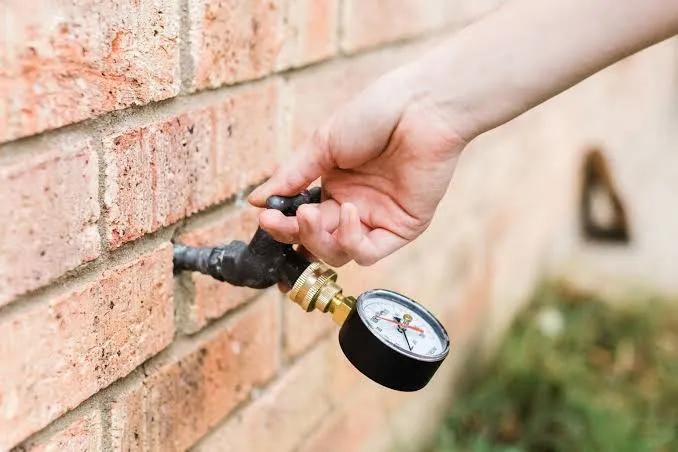
Use a simple pressure gauge on an exterior hose spigot or laundry sink bib. Typical residential targets are often in the 50–70 PSI range, and many manufacturers recommend staying below 80 PSI. If you’re consistently high, hammer becomes much more likely.
If you want to do this properly, use a gauge with a “tattle” needle so you can see the peak pressure after fixtures cycle.
Simple isolation tests for PRV and expansion tank symptoms
Pressure creeps up over time (no one using water): can point to thermal expansion or PRV issues.Hammer across multiple fixtures: often points to overall pressure/support problems, not just one appliance.Bang plus faucet sputter: can indicate air issues or a valve/chatter condition that needs a closer look.
These checks don’t replace a professional diagnosis, but they keep the conversation factual instead of guessing.
How pros fix water hammer (in the right order)
A clean fix is about addressing the cause, not just quieting the symptom. Here’s the order we typically follow so the solution sticks.
Secure the piping and add proper supports
If a pipe is moving, we start there. The best arrestor in the world won’t help if the line is free to whip inside a wall.
Add proper hangers at the right spacingUse isolators where lines pass through framingEliminate hard contact points that transmit sound
Right-size and place water hammer arrestors
This is where water hammer arrestor installation comes in. Arrestors add a cushion (a chamber designed to absorb the shock wave) so the pressure spike doesn’t slam through the system.
Key point: the arrestor needs to be placed near the fast-closing valve and sized appropriately. Too far away, and it’s less effective. Wrong size, and you’ll still get noise.
Adjust or replace a pressure reducing valve (PRV)
If pressure is high, we correct that. A properly set PRV reduces the energy behind every shutoff event. If a PRV is failing, it may not regulate consistently, which can make hammer unpredictable.
Add or service a thermal expansion tank
When a system is closed, an expansion tank is often the right way to manage pressure rise as water heats. If a tank is waterlogged or incorrectly charged, pressure spikes can show up as banging, dripping T&P valves, or “random” fixture noise.
Verify and document the fix (no guessing)
At MH Plumbing, we like fixes you can prove. That means:
Re-test the original trigger fixtureConfirm static and peak pressure after cyclingShow the GC or homeowner what changed and why
It’s the difference between “seems better” and “this is handled.”
Water hammer arrestor installation: where they go and what to expect
Arrestors aren’t new, but the right installation is what matters. When we install them on North Metro projects, the goal is simple: stop the thump without creating service headaches later.
Common locations: laundry box, dishwasher, ice maker, commercial fixtures
Laundry: at the washer box or nearby branch, hot and cold as needed.Dishwasher: under the sink or at an accessible branch point.Ice maker: at the fridge supply or in an accessible cabinet run.
For higher-demand or specialty fixtures, we’ll place arrestors where they’re accessible and effective, not buried behind a finished wall unless there’s a very good reason.
Choosing the correct type and size
Arrestors are not one-size-fits-all. Selection depends on fixture type, pipe sizing, run length, and how aggressive the valve closure is.
Match the arrestor to the fixture group and demandUse proven, code-appropriate productsInstall with clean access for future service
What a clean, predictable install looks like on a job site
Our “No Chaos” approach is built for GCs who don’t have time for surprises:
Respect for the schedule: we show up when we said we would.Respect for the home: floor protection, booties, and cleanup are standard.Transparent scope: you’ll know what we’re doing, where, and why.
If we need to open something up, you’ll hear it early, with options, not at the end of the day when everyone’s trying to lock up.
When to call MH Plumbing (North Metro Minnesota)
If you’re hearing pipes banging when water turns off and you want it solved without a bunch of back-and-forth, we can help. We work with custom home builders, high-end remodelers, and homeowners across the North Metro, including Blaine, Coon Rapids, Andover, and Ham Lake.
Signs it’s more than “just noise”
Banging happens at multiple fixtures across the homeYou see drips developing at stops or appliance connectionsPressure reads near or above 80 PSI, or it spikes over time
How our No Chaos SOP prevents surprises and callbacks
Proactive communication so you’re not chasing updatesClean workmanship that protects finish work and client trustPartner mindset so your project stays smooth
What you’ll get: transparent scope, schedule, and site cleanliness
We’ll identify the trigger, verify system pressure, and recommend the simplest fix that actually holds. If that’s a targeted arrestor, great. If it’s support, PRV adjustment, or expansion control, we’ll walk you through it and document what we did.
If you’re a GC and want a plumbing partner who respects the schedule and keeps the job site clean, reach out to MH Plumbing and we’ll get you a plan that protects your reputation.
