Why Is My Water Heater Making a Loud Popping or Knocking Noise? (Mineral Scale Breakdown)
If you’ve got a water heater making knocking noise, or you’re hearing loud popping like popcorn in the tank, you’re usually not dealing with a “mystery.” In North Metro Minnesota, it’s most commonly mineral sediment that’s settled to the bottom of the tank and started breaking down into hard scale.
The good news: this is often fixable. The not-so-good news: if it’s ignored long enough, it can turn into slow hot water recovery, higher operating cost, and a tank that fails earlier than it should.
What that popping or knocking sound usually means
Popping vs. knocking vs. rumbling
Homeowners describe this a few different ways, but they usually point to the same root cause:
Popping or crackling: steam bubbles forming under a layer of sediment and snapping loose.Knocking: larger pockets releasing or pieces of scale shifting when the burner or elements cycle.Rumbling: heavier sediment “rolling” around as the water heats and circulates.
Why it often gets worse over time
Sediment doesn’t show up all at once. A little collects, then a little more. Once it starts baking into scale, it insulates the tank bottom or the elements, so the heater works harder and the noises become more frequent.
Why Minnesota water makes it common
Many areas around Blaine, Coon Rapids, Andover, and Ham Lake have mineral content that can leave deposits behind. That’s not a knock on local water, it’s just reality. If a tank isn’t flushed periodically, those minerals end up in the heater.
Mineral scale breakdown: what’s happening inside the tank
Sediment settles, then bakes into scale
As water is heated, dissolved minerals can precipitate out and settle to the bottom. Over time, the bottom of the tank becomes the “landing zone” for:
Calcium carbonate depositsSand or grit from the supplyRust flakes from aging piping
With repeated heating cycles, that layer can harden into a crusty scale.
Steam bubbles and the “popcorn” effect
When a burner (gas) or heating element (electric) heats the water, parts of the sediment layer can get hotter than the surrounding water. Tiny steam bubbles form underneath the sediment. When they finally break through, you hear the pop, crackle, or knock.
Heat transfer drops and components work harder
That sediment layer acts like insulation. The heater needs more time and energy to get the same amount of hot water. That can show up as:
Longer recovery time between showersHigher gas or electric usageMore frequent cycling and wear
What happens if you ignore a water heater making knocking noise
Higher energy bills and slower recovery
A scaled tank bottom doesn’t transfer heat efficiently. On remodel projects or custom builds, that’s where comfort complaints start: “It used to keep up, now it doesn’t.”
Shorter tank life and premature failure
Sediment can create hot spots and stress the tank. Over time that can contribute to early tank deterioration. You might not see it until you’ve got moisture at the base or a full failure.
Risk of leaks, nuisance shutdowns, and callbacks
For builders and remodelers, callbacks are the real cost. A noisy, scaled heater can be a precursor to performance issues that trigger homeowner complaints, schedule interruptions, and extra coordination.
Quick checks you can do (without turning your mechanical room into a mess)
Confirm the sound location
Make sure the sound is actually coming from the water heater and not a pipe expanding, a loose strap, or a recirculation pump. Stand next to the tank during a heating cycle and listen at:
The lower tank area near the burner or elementsThe hot and cold piping above the tankNearby ductwork or framing that could be resonating
Check temperature and usage patterns
If the thermostat is set unusually high, the heater can be more aggressive on heat cycles. Also note when it happens:
Right after a large draw like a bathDuring morning peak usageRandomly through the day with no hot water use
Look for signs of sediment and aging
These aren’t perfect indicators, but they help:
Water heater age over eight to twelve yearsRusty or gritty water at hot tapsSmall temperature swings at showers
Flushing water heater sediment: when it helps and when it doesn’t
Light sediment vs. heavy scale
Flushing water heater sediment works best when the tank has loose sediment that can be carried out through the drain valve. If the sediment has turned into hard scale, a simple drain-and-fill might reduce noise a little, but it may not fully solve it.
Why some flushes don’t fix the noise
Two common reasons:
Clogged drain valve: sediment blocks the outlet and the flush barely moves material.Scale bonded to the bottom: the “crust” stays put, so the popping continues.
What a pro flush includes
A professional flush is about more than opening a valve. Depending on the situation, it can include:
Controlled shutdown and safe cool-down strategyDrain valve clearing or replacement if it’s pluggedRepeated agitation and flush cycles to pull debris outInspection for leakage, venting concerns, and overall condition
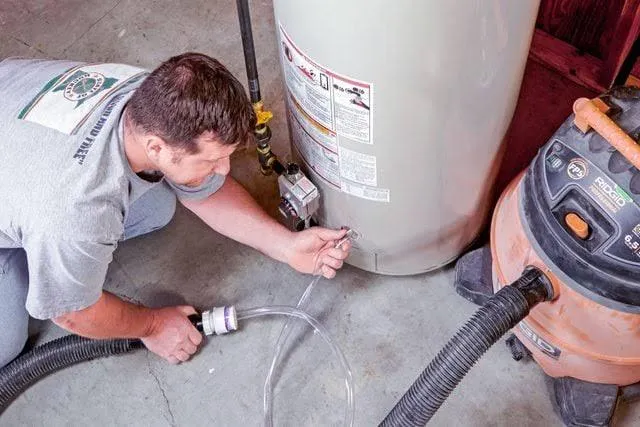
DIY basics: how to flush a tank water heater safely
If you’re a homeowner and you’re comfortable working around water and gas or electricity, a basic flush can help on light sediment. If you’re a GC, this is usually where you decide whether it’s worth having your crew touch it or calling your plumbing partner to keep the schedule clean.
Tools and setup
Garden hose long enough to reach a floor drain or exteriorWork gloves and eye protectionBucket and towels for minor drips
Step-by-step flush process
Turn off power or gas: electric at the breaker, gas at the control to pilot or off.Shut off cold water supply: close the valve on the cold inlet above the heater.Relieve pressure: open a hot faucet in the home to let air in.Connect a hose: attach to the drain valve and route to a safe drain location.Drain a few gallons first: watch for cloudy water and grit, that’s sediment leaving.Flush in short bursts: briefly open the cold supply to stir the tank, then drain again.Refill fully before reheating: close the drain, open cold supply, run hot faucet until air stops.Restore power or gas: only after the tank is completely full of water.
Important: water can be scalding. If you’re not sure, don’t gamble. A rushed flush can create a bigger problem than the noise you started with.
After-flush checks
Confirm there are no leaks at the drain valve or piping jointsListen through a full heat cycle for reduced poppingVerify the temperature stabilizes at fixtures
When to call a pro (especially on remodel or custom build schedules)
Signs the tank is heavily scaled
Call a pro if any of these are true:
The noise is very loud and constant during heatingThe drain valve won’t flow or only dribbles outYou see rust, moisture, or corrosion around the tank base
Gas, venting, and code considerations
With gas units, we also pay attention to safe combustion, venting, and clearances. If a unit is backdrafting, improperly vented, or showing flame issues, that’s not a DIY day.
Commercial and multi-unit considerations
For B2B projects, noisy water heaters can be a sign that routine maintenance is slipping. In multi-family and light commercial applications, we look at load sizing, recovery demands, and maintenance intervals so you’re not chasing tenant complaints.
How MH Plumbing handles noisy water heaters in the North Metro
No Chaos scheduling and clean work areas
We built our process around one goal: respect the home and respect the schedule. That means we show up when we say we will, protect finished surfaces, and leave the mechanical room cleaner than we found it.
Transparent options: flush, repair, replace
When you call MH Plumbing, we’ll walk you through what we’re seeing and what it means. Typical paths include:
Maintenance flush: when the tank is in good shape and sediment is the main issue.Targeted repair: drain valve issues, anode rod considerations, or control problems.Replacement planning: when the tank is near end-of-life or showing leakage risks.
Documentation that protects your reputation
Builders and remodelers don’t just need the fix, they need the handoff to feel professional. We communicate clearly, keep the job site clean, and can provide before-and-after visuals so you can show your client the work was handled the right way.
FAQs about popping and knocking water heaters
Is a popping water heater dangerous?
Most popping caused by sediment is not an immediate safety emergency, but it is a warning sign. If you smell gas, see water leaking, notice scorch marks, or suspect venting issues, shut it down and call a pro.
Can sediment damage the heating elements?
Yes. On electric units, sediment can bury elements and cause overheating or early element failure. On gas units, heavy scale can stress the tank bottom and reduce efficiency.
How often should I flush in Minnesota?
A common starting point is yearly maintenance, but it depends on water quality, usage, and whether you have water treatment. If you’re hearing noise, you’re already past the “perfect world” timeline, so it’s worth getting it evaluated.
Does a water softener prevent the noise?
It can help reduce mineral buildup, but it doesn’t eliminate the need for maintenance. Softened water can still carry fine particles, and tanks still benefit from periodic flushing.
If you’re in the North Metro and want this handled without chaos, MH Plumbing can take a look, give you clear options, and keep the space clean while we do it.
